
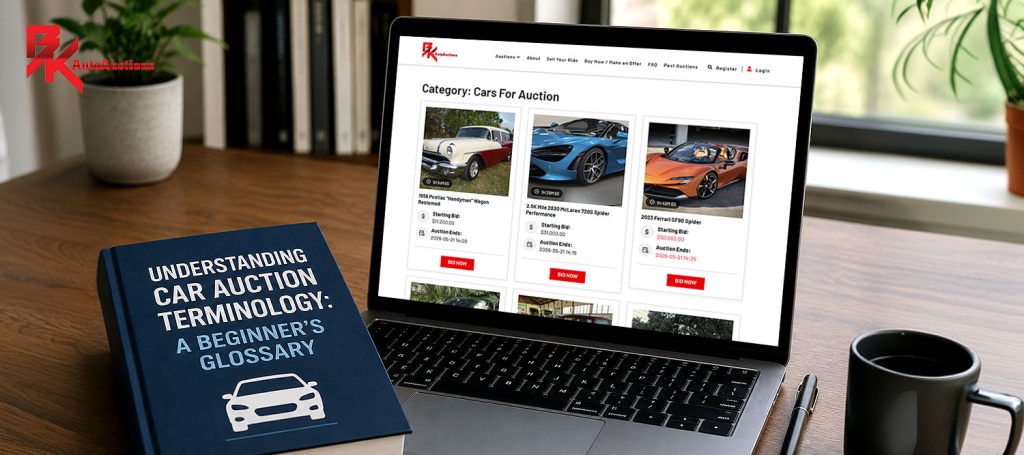
Buying a car at an auction can feel exciting and confusing at the same time. Many first-time buyers hear words like reserve price, buyer’s premium, proxy bid, and salvage title without knowing what they mean. This is why learning basic car auction terminology is important before you place your first bid.
A car auction is a place where vehicles are sold through competitive bidding. Some auctions are held in person, while others are held online. Buyers compete by offering higher prices until the auction ends. The highest bidder usually wins the vehicle. This guide is a beginner’s glossary of car auction terminology, presented in clear, simple language. You will find simple definitions of terms used in live and online car auctions. Whether you plan to buy from a public sale or a dealer-only event, this glossary will help you understand key words and phrases.
What Is a Car Auction?
A car auction is a place where people buy and sell cars by bidding rather than paying a set price. In an auction, sellers offer a vehicle, and bidders compete by offering higher amounts. The highest bid usually wins the car at the end of the sale. This basic process makes auctions different from regular buying and selling.
In most auctions, an auctioneer leads the event and takes bids from buyers. The auctioneer speaks quickly and clearly so bidders can follow the price increases. This is sometimes called the “auction chant” when performed in person.
How Vehicle Auctions Work
The auction process usually follows a few clear steps:
- Registration – Before you bid, you must register and obtain a bidder number.
- Inspection – Review the vehicle condition report or inspect the car yourself.
- Bidding – The auctioneer starts the bidding. Buyers raise their offers in set amounts until the highest bid is reached.
- Winning Bid – The highest bidder pays the final price and completes the sale.
Types of Car Auctions
Car auctions come in different forms:
- Public auctions are open to everyone, so anyone can bid and buy a vehicle.
- Dealer auto auctions are for licensed dealers only and often feature many wholesale vehicles.
- Salvage vehicle auctions sell cars with damage or special title conditions, like a salvage title.
- Online auctions let people bid without being at a live event.
- Some auctions also sell government or police vehicles to the public.
Understanding how auctions work helps you prepare before you bid. You will learn why cars at auctions often sell for lower prices than at regular dealerships.
Why Understanding Car Auction Terms Matters
Knowing car auction terminology is very important before you bid. If you enter an auction without knowing the words used, you could make mistakes that cost you money or leave you confused. When you understand what key terms mean, you can bid more confidently, follow the auction process better, and make smarter decisions.
At a typical car auction, words like reserve price, buyer’s premium, bid increments, and lot number are often used. If you don’t know these terms, you may misunderstand how much you will actually pay or how the sale works. For example, the reserve price is the lowest price the seller will accept, and the buyer’s premium is an extra fee added to the winning bid. Knowing these helps you plan your budget and avoid surprises at checkout.
Understanding auction bidding terms also helps you compare different auctions. At a public auction, anyone can compete, while a dealer auto auction may have rules only for licensed dealers. Some auctions have a no-reserve auction, where the highest bid wins at any price, and others have a reserve price auction, where the car will not sell unless the bidding meets the seller’s minimum.
When you know the terminology, you can better understand fees and processes. Online car auction terms include things like proxy bids, where an automatic system bids up to a maximum amount you set, and a pre-bid auction, where you can place offers before live bidding starts. Knowing these concepts helps you use online platforms wisely. For many buyers, knowing auto auction glossary words means less stress and fewer surprises. You can read vehicle condition reports, understand how an as-is vehicle sale works, and avoid costly errors, such as ignoring an odometer disclosure or a salvage title status. When you learn the language of car auctions, you become a smarter participant in both live and online auctions.
Essential Car Auction Terminology
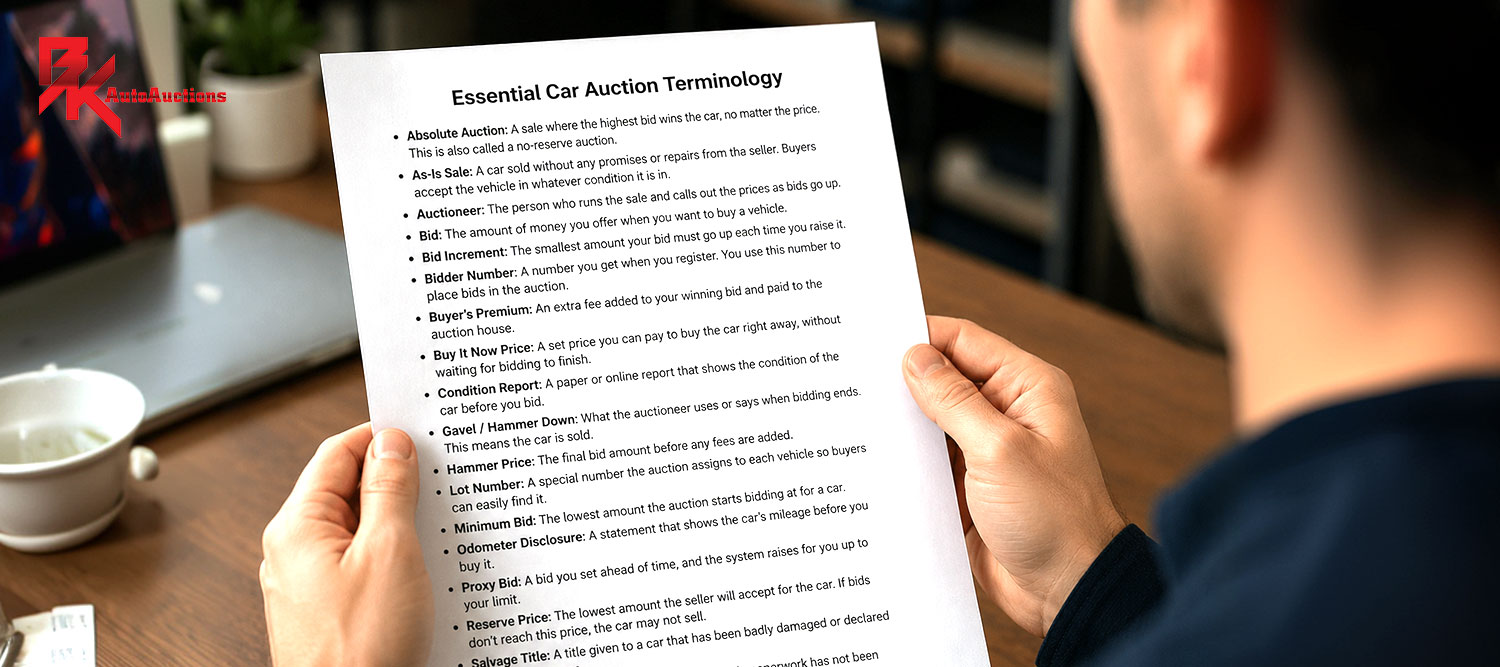
Here are simple definitions of important car auction terms that every beginner should know. These words are used in live auctions, online car auctions, and dealer events. Knowing these terms helps you bid confidently and avoid surprises.
Absolute Auction: A sale where the highest bid wins the car, no matter the price. This is also called a no-reserve auction.
As-Is Sale: A car sold without any promises or repairs from the seller. Buyers accept the vehicle in whatever condition it is in.
Auctioneer: The person who runs the sale and calls out the prices as bids go up.
Bid: The amount of money you offer when you want to buy a vehicle.
Bid Increment: The smallest amount your bid can increase each time you raise it.
Bidder Number: A number you get when you register. You use this number to place bids in the auction.
Buyer’s Premium: An extra fee added to your winning bid and paid to the auction house.
Buy It Now Price: A set price you can pay to buy the car right away, without waiting for bidding to finish.
Condition Report: A paper or online report that shows the condition of the car before you bid.
Gavel / Hammer Down: What the auctioneer uses or says when bidding ends. This means the car is sold.
Hammer Price: The final bid amount before any fees are added.
Lot Number: A special number the auction assigns to each vehicle so buyers can easily find it.
Minimum Bid: The lowest amount at which the auction starts for a car.
Odometer Disclosure: A statement that shows the car’s mileage before you buy it.
Proxy Bid: A bid you set ahead of time, and the system raises for you up to your limit.
Reserve Price: The lowest amount the seller will accept for the car. If bids don’t reach this price, the car may not sell.
Salvage Title: A title given to a car that has been badly damaged or declared a loss by insurance.
Title Pending: means the car’s official ownership paperwork has not yet been finalized.VIN (Vehicle Identification Number): A unique 17-digit code that identifies the car and its history.
Red Flags Beginners Should Watch For
When you buy a car at an auction, there are some red flags you should watch for to avoid a bad purchase. Auctions can be a great way to find a deal, but they also come with risks. First-time buyers should pay close attention to details such as salvage titles, hidden damage, and missing information.
1. Hidden Damage or Flood History
Cars with a salvage title or flood-damage title may look good on the outside but could have serious problems underneath. These vehicles are often sold at salvage auctions after being declared a total loss by an insurance company. Even if they seem cheap, electrical systems, engines, and safety parts may be damaged in ways you cannot see at first glance.
2. Incomplete or Vague Vehicle History
If the listing does not include a full vehicle history report or information about past accidents and title branding, this can be a sign that something is being hidden. Always ask for history reports and check the VIN (Vehicle Identification Number) before you bid.
3. Lack of Inspection or Test Drive
Some auctions do not allow thorough inspection or test drives before bidding. If you cannot inspect a vehicle closely, you may miss important issues like engine problems, frame damage, or worn parts. Always try to inspect a car yourself or bring a mechanic when possible.
4. Low or Missing Condition Details
Cars listed with very few details about their condition, damage history, or mechanical issues can be risky. Terms like “runs when parked” or too few photos may hide deeper problems that cost you money later.
5. Emotional Bidding and Budget Drift
Auctions move quickly, and the excitement can push you to bid more than you planned. Going above your maximum budget because you are caught up in competitive bidding can lead to bad deals. Set a firm limit before you start and stick to it.
6. Unclear Title Status
If a vehicle’s title status is unclear or missing from the listing, be cautious. Cars without clear titles or with wording like “title pending” can create problems when you go to register the vehicle at the DMV. Always confirm title details before bidding.
Tips for First-Time Car Auction Buyers

Here are easy tips you can use to buy a car at auction with more confidence. Learning these steps helps you avoid mistakes and stay in control of your budget and decisions.
1. Do Your Research First
Before you bid, learn about the vehicle you’re bidding on. Check its market value, learn common problems for that model, and study its vehicle history report. Knowing what other similar cars sell for helps you set a fair maximum price.
2. Set a Budget and Stick to It
Decide on the most you are willing to pay before the bidding starts. Include all fees like the buyer’s premium, transport costs, registration fees, taxes, and repairs in your total budget. This stops you from paying more than you planned.
3. Visit Auctions Before You Bid
If you are new, you can watch a public car auction first without bidding. This lets you see how the auctioneer works the crowd, how bids rise, and what the auction atmosphere is like before you jump in.
4. Check Fees and Rules
Every auction has different cost rules. Some add a buyer’s premium or administrative fees to the hammer price. Make sure you know all charges before you bid so your final cost isn’t a surprise.
5. Know the Inspection Rules
Look at or inspect the car before the auction if possible. For online car auctions, review all photos and condition details. If you can’t inspect it, be careful and understand this risk.
6. Watch for Red Flags
If a listing has very little information or poor vehicle history details, that can be a red flag. Look for complete reports and VIN checks to reduce the risk of buying a problem car later.
7. Stay Calm During Bidding
Auction bidding can be fast and exciting. Don’t let excitement make you go over your budget. Many first-time buyers get caught up in bidding wars, but sticking to your plan helps you get a better deal.
Frequently Asked Questions
Here are common beginner questions about car auction terminology, along with simple answers to help you understand auctions better.
What does “reserve price” mean?
A reserve price is the lowest amount a seller will accept for a car at an auction. If bidding does not reach this amount, the car may not sell. This price is often not shown to bidders.
What is a “buyer’s premium”?
A buyer’s premium is an extra fee you pay on top of the final winning bid. The auction house charges this fee to cover the cost of running the sale. It is usually shown in the auction rules before you bid.
How do I know a vehicle’s history?
Before you bid, check the vehicle’s history using the VIN (Vehicle Identification Number). Dealers and auction sites often provide vehicle history reports that show past accidents, title brands, and other important information.
Can I bid if I am not at the auction in person?
Yes. Many auctions let you bid online. You can place a proxy bid, and the system will bid for you up to a maximum amount you set.
What does “as-is” mean at an auction?
As-is means the car is sold without any warranty or guarantee. You accept the condition as shown.
What is a salvage title?
A salvage title is given to a vehicle that was declared a loss by an insurance company due to damage, such as flood or a crash. Cars with salvage titles often sell for cheaper but may need repairs.
Why should I learn auction terms before I bid?
Knowing the meanings of key terms such as reserve price, buyer’s premium, lot number, and hammer price helps you budget correctly and avoid costly surprises at the auction.
What is a lot number?
A lot number is a unique identifier for each car in the auction. It helps you find and track the specific vehicle you want to bid on.
Do car auctions have hidden fees?
Yes. In addition to the winning bid and buyer’s premium, some auctions add registration fees, paperwork fees, or taxes. Always check the fee list before bidding.
Can anyone buy cars at a dealer auction?
Some auctions are only open to licensed dealers. Others are public auctions where anyone can register and bid. Check the auction rules before you join.